
Category Archives: General
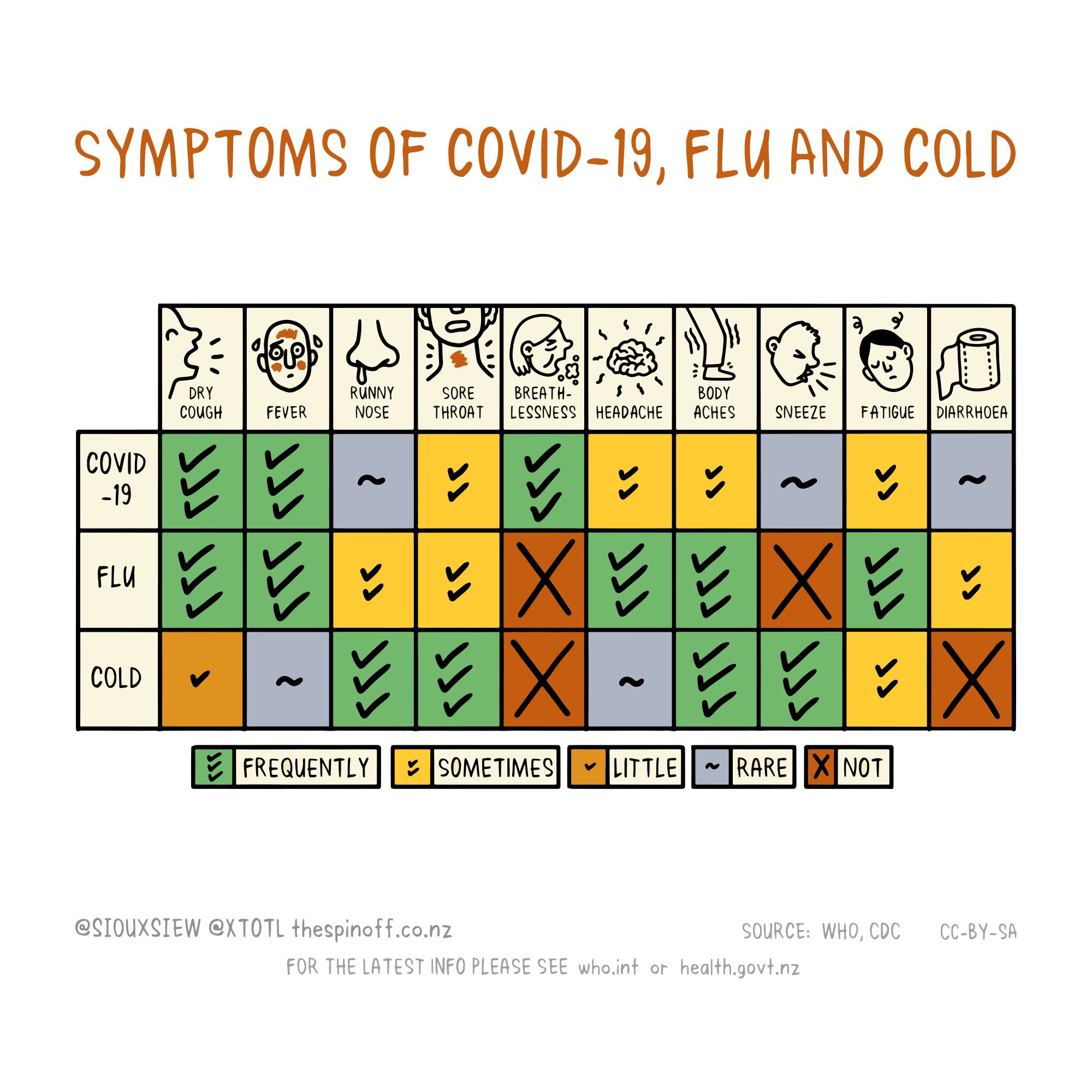
Info you might like to know about
https://www.facebook.com/sribhainisahib/videos/186327702798299/?t=9
This is a good point

Immigration has been used to boost the economy. It’s a false claim. We have neither the housing nor the infrastructure to support it. And so it has been a cost to our economy. And don’t get me started on it’s impact on low wage stuff…
Martyn Bradbury @CitizenBomber
So Labour are forcing those in emergency housing to pay 25% rent NZF are handing photos of journalists over to right wing hate blogs & the Greens woke identity politics is so alienating it’s making them politically irrelevant How did it get to this in less than 3 years?
It’s Not A Faux Pas To Use Aotearoa In English as it was first spoken by Englishmen, So an English word
SB’s recent article on The BFD, Our Country is New Zealand NOT Aotearoa, included a tweet that stated that “if you are speaking English then speak English.” That statement brought an old article to my mind. It comes with the inflammatory title of Aotearoa a European hoax. I don’t agree with all of its conclusions, but I really do love the opening line:
Maori arise. Tuhoe, march. You are in danger of having foisted upon you, in the guise of Maori history, a great European romantic invention.
Therein lies the problem most people ignore. In The Treaty of Waitangi, the land is only referred to as “New Zealand” and “Nu Tirani”. In modern times, the North Island has the official name of “Te Ika a Maui” (the fish of Maui) and the South Island is “Te Waipounamu” (the waters of greenstone), but prior to that the North Island was referred to as Aotearoa by some Maori.
Englishmen were the first to use “Aotearoa” as a collective name for our islands.
Aotearoa was popularised by men like Douglas Lilburn in his lovely Aotearoa Overture and Judge Thomas Henry Smith in his Maori translation of the national anthem. It was used frequently by historians like Governor George Grey and William Pember Reeves, and a host of European men from the Department of Education during the 19th and 20th centuries.
Therefore, Aotearoa is indeed an adopted English word, a great product of colonialism, and is undeserving of derision as “not English”. It’s also been adopted in Te Reo Maori as the primary name for New Zealand.
On that subject, it’s not strange to see that many Maori words are just copied from English, but transliterated where necessary. Nor is it wrong that many English words have filtered into just about every European language. Nor is it a problem that many Maori words are now being used in New Zealand English—koha words, as I call them. It’s inevitable where multiple languages exist in close proximity. And yes, you should try to pronounce them correctly just as we do with the loan words of other languages.
Complaints that the forced use of Aotearoa is a plot to alter the official name of the country, is North Island-centric, revisionist, and promoted by those who want to Myanmar-ise the nation, etc, are all perfectly valid criticisms and beyond the scope of my brief remarks. Keep making noise and the legal bid for “Aotearoa” will go the way of attempted assaults on our flag and anthem.
I must simply confess that every time I hear someone say “Aotearoa”, it puts a smile on my face as I think of those English and Irish colonial romantics now long buried.
Regardless of your opinions on the matter, it’s not a faux pas to use Aotearoa in English.
I wonder what these people are doing now

Interesting
Not global warming back in 1896, Just 48.9 temps
It is as if history is being erased. For all that we hear about recent record-breaking climate extremes, records that are equally extreme, and sometimes even more so, are ignored.
In January 1896 a savage blast “like a furnace” stretched across Australia from east to west and lasted for weeks. The death toll reached 437 people in the eastern states. Newspaper reports showed that in Bourke the heat approached 120°F (48.9°C) on three days (1)(2)(3). The maximumun at or above 102 degrees F (38.9°C) for 24 days straight.
By Tuesday Jan 14, people were reported falling dead in the streets. Unable to sleep, people in Brewarrina walked the streets at night for hours, the thermometer recording 109F at midnight. Overnight, the temperature did not fall below 103°F. On Jan 18 in Wilcannia, five deaths were recorded in one day, the hospitals were overcrowded and reports said that “more deaths are hourly expected”. By January 24, in Bourke, many businesses had shut down (almost everything bar the hotels). Panic stricken Australians were fleeing to the hills in climate refugee trains. As reported at the time, the government felt the situation was so serious that to save lives and ease the suffering of its citizens they added cheaper train services:
“The Commissioner of Railways promised a deputation of members of Parliament to run a special train every Friday at holiday excursion rates for the next month to enable settlers resident in the Western part of the colony to reach the mountains to escape the great heat prevailing.” (Source)
It got hotter and hotter and the crowded trains ran on more days of the week. The area of exodus was extended to allow not only refugees from western NSW to flee to the Blue Mountains but also people to escape via train from the Riverina to the Snowy Mountains. The stories are heartbreaking. “A child sent to the mountains to escape the city heat died at the moment the train arrived.” “Six infants have died at Goulburn since January 1 through the excessive heat.” Towns were losing their esteemed, lamenting the loss of the good reverend, or of their well known miners. Children were orphaned.
“A woman has been brought to the Bulli Hospital in a demented condition, suffering from sunstroke. She was tramping the roads, with her husband, two days before, when she was prostrated by a sunstroke. Her husband carried her through all the sweltering heat to Bulli, taking two days over the journey.” (Source).

Bourke circa 1900, National Library of Australia
The Victorian heatwave of 2009 was sold as the worst heat wave in southern Australia for 150 years.
In 1896 the heat was causing people to faint, become demented and was even blamed for driving people mad. “Several women fainted in the streets. A little girl, while walking along Surrey Hills, suddenly became demented through the heat.” In Bendigo “a young man named Edward Swift, hairdresser, was so overcome by the heat that he was unable to work, and in despair shot himself, in the breast. It is a hopeless case.” Longreach“police authorities at Longreach received information that a man who was insane was about fourteen miles out of the town.” “The bodies of people who die of sunstroke decompose very quickly”. An axe wielding man in Bourke cut down three telegraph poles before he was “secured” by police. Presumably the real cause of the madness was something else, but the heat was the last straw. “Birregurra was stirred from its wanted sleepiness on Saturday evening last by the appearance in the streets of a mad man who caused no small consternation.” It could be that nuttiness was equally common on other months, or other years. But at the time, people blamed the heat.
With this and people dropping dead in the streets from Perth through Adelaide to Sydney, the heat wave was described as being universal from west to east . It went north into Queensland and south through Victoria.…twice, by which time Australians considered themselves to be “Under Fire”.
Later in 1896, heat waves also occurred in India, Burma, Borneo, America. (It was bad in New York. Listen here.) There was heat in England, Germany and Spain. 1896 was an example of extreme weather. [It was obviously the fault of the evil power stations, eh? Just 14 years earlier, Edison had built the first coal-fired electric generating station. If only people had understood just how dangerous it was.  – Jo]
– Jo]
Thermometers were non-standardized in 1896. Some of the extraordinary temperatures come from thermometers with descriptions like (“under passion tree vine.”) There it got to 123 in Ultimo in Sydney on January 14. Though some thought the vine thermometer was actually more accurate “ namely, that what is known as the true shade is the shade afforded at the Observatory by one of the loveliest little summer-houses, almost buried in foliage, but with lattice-work all round, so that the breeze may play upon the thermometers, but where the sun’s rays can by no means be admitted.”.
Extreme heat in 1896: Panic stricken people fled the outback on special trains as hundreds die.
Food for thought
